
Hernes: A New Neighborhood for Everyone?
Social housing measures and strategic approaches for an inclusive neighborhood
What measures can the municipality take to ensure that low-income groups and families with children gain real access to the housing market in the new neighborhood at Hernes?
Goals
We were commissioned to:
Develop a concrete and operational model for social housing development in the new Hernes neighborhood
Explore the municipality's room for maneuver as landowner, planning authority, and collaborative partner
Assess the use of environmental and quality programs as tools for social housing work
Create transferable value for other transformation areas and municipalities
Information
When Bodø airport is relocated, an entirely new urban area right next to Bodø city centre is freed up. The Hernes neighborhood therefore represents a rare opportunity: to plan a neighborhood from the ground up with clear social ambitions — with the municipality as both owner and regulatory authority, and a statutory responsibility to secure housing for those who need it.
It has been decided that the housing offer in the neighborhood should be varied, reduce social inequalities, and provide everyone with a safe and inclusive living environment. At the same time, we know that high construction costs, market logic, high environmental requirements, and the attractiveness of a central location make it difficult to ensure real access for families with children and low-income groups. The project also has a very long development horizon of 50–100 years, which makes it particularly challenging to know what needs the city's residents will have when the neighborhood is eventually built.
Bodø municipality therefore wanted not just an overview of possible measures, but an operational model showing how the municipality can actually use its room for maneuver — legally, economically, and organizationally — to achieve its goals.
Results
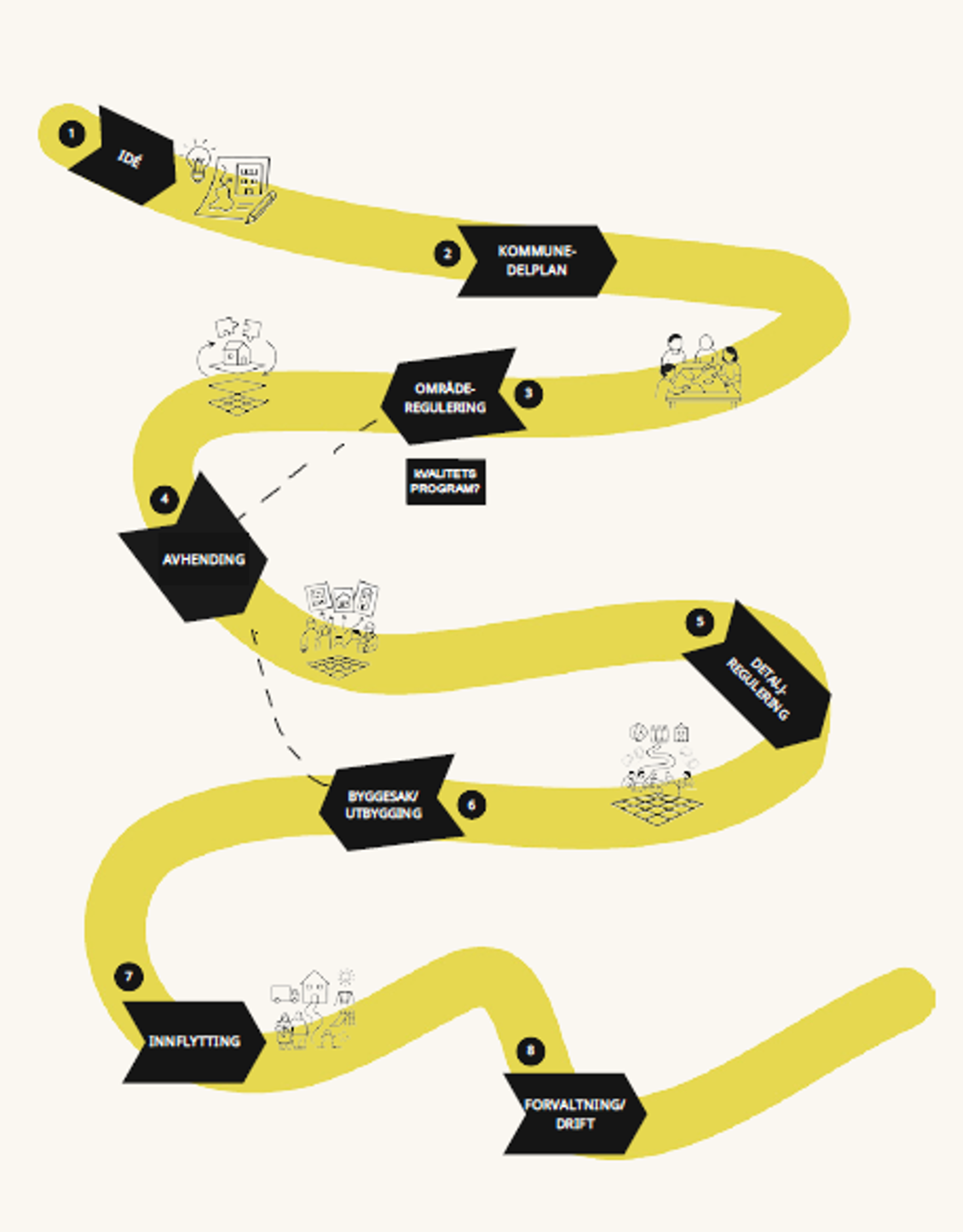
Development of the "Hernes Model": based on extensive participation both internally within the municipality and externally, we developed a comprehensive framework that ensures social sustainability is embedded and followed up in all phases of urban development — from idea and planning, through ownership and implementation, to move-in, operation, and management over time.
Clear link between planning and housing policy: the work highlighted how municipal sub-plans, zoning, and land disposal can be used as housing policy instruments — not merely technical planning processes.
Analysis of environmental and quality programs as tools for achieving social housing goals, with recommendations on principles, integration into the planning process, and content.
Report:
Insights, housing purchase models, social housing measures, and the Hernes Model (NO)
Client: Bodø Municipality, with funding from Husbanken
Partner: Advokatfirmaet Haavind AS
Fabric+ services:
Process management
Advisory services on spatial planning, property development, and interaction in urban development
Service- and systems-oriented design
Project Lead: Siri Arntzen-Ratnarajan